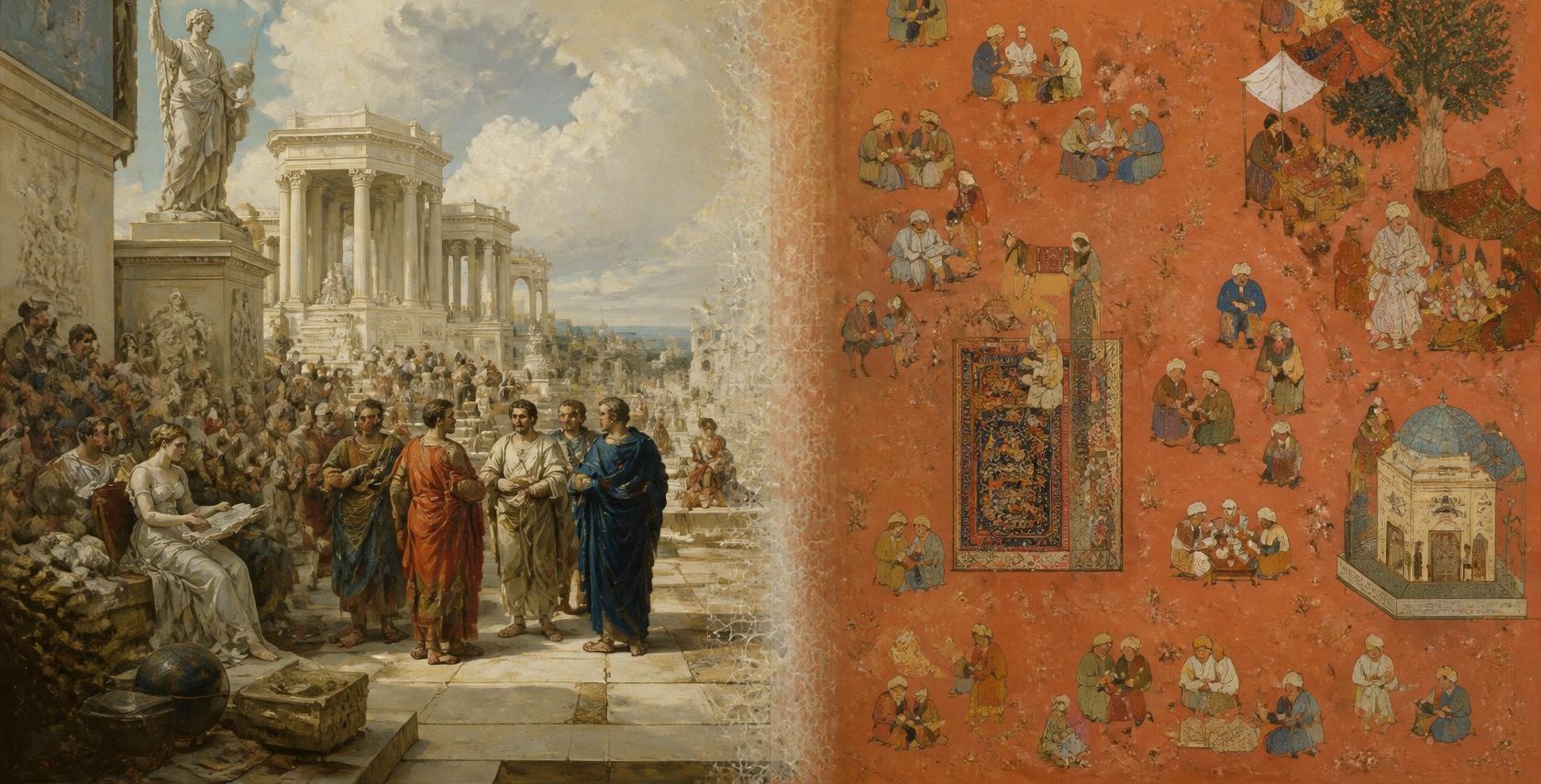
Since antiquity, the Western world has been interested in the exoticism and natural resources of the East, which is almost entirely different from itself in socio-economic and cultural terms. Driven by a philosophy of dominance, the West has strived to legitimize its demands by giving the East an academic identity in all its practices. Orientalism, masked by academic, intellectual, and artistic studies, was a project that fueled colonial ventures. Thus, on the one hand, colonial activities were developed with the knowledge produced about the East under the umbrella of Orientalism, and on the other hand, Orientalism was financed with the resources obtained through colonial channels, thus continuing colonialism. After the Second World War, with America gaining supremacy, European countries lost their dominance in the East. In this new American-centered era, almost every thought/discipline took the prefix "post": post-structuralism, postmodernism, post-Marxism, post-colonialism, etc. Some disciplines, such as postmodernism and postcolonialism, with their "post" prefix, have led to ambiguity and have been problematized through various debates. The peoples of the countries that R. J. Yung called the "tricontinental" (Latin America, Asia, and Africa) adopted a critical stance against Orientalism and colonial powers. This awakening, especially after the 1950s and 1960s, was characterized by anti-Western "postcolonial critiques" from the peoples, writers, thinkers, etc., of countries that had been liberated from colonialism (colonialism transforming itself). Transformed colonialism continued as the worst form of imperialist practice through postcolonial applications. Orientalism, in its artistic, philosophical, and scientific aspects (in terms of its thought structure), has been illustrated from the Renaissance to modern Orientalism and to the present day with examples in painting, cinema, literature, and even the Istanbul Biennial. In this context, the primary aim of this article is to question the political, economic, and cultural realities underlying the "orientalism" mask produced by the West, and to examine its relationship with "postcolonialism." Furthermore, another aim of the article is to examine "colonialism," "orientalism"/neo-orientalism, and "postcolonialism" from ontological, epistemological, and sociological perspectives.
DOI: 10.7816/idil-06-30-07


