
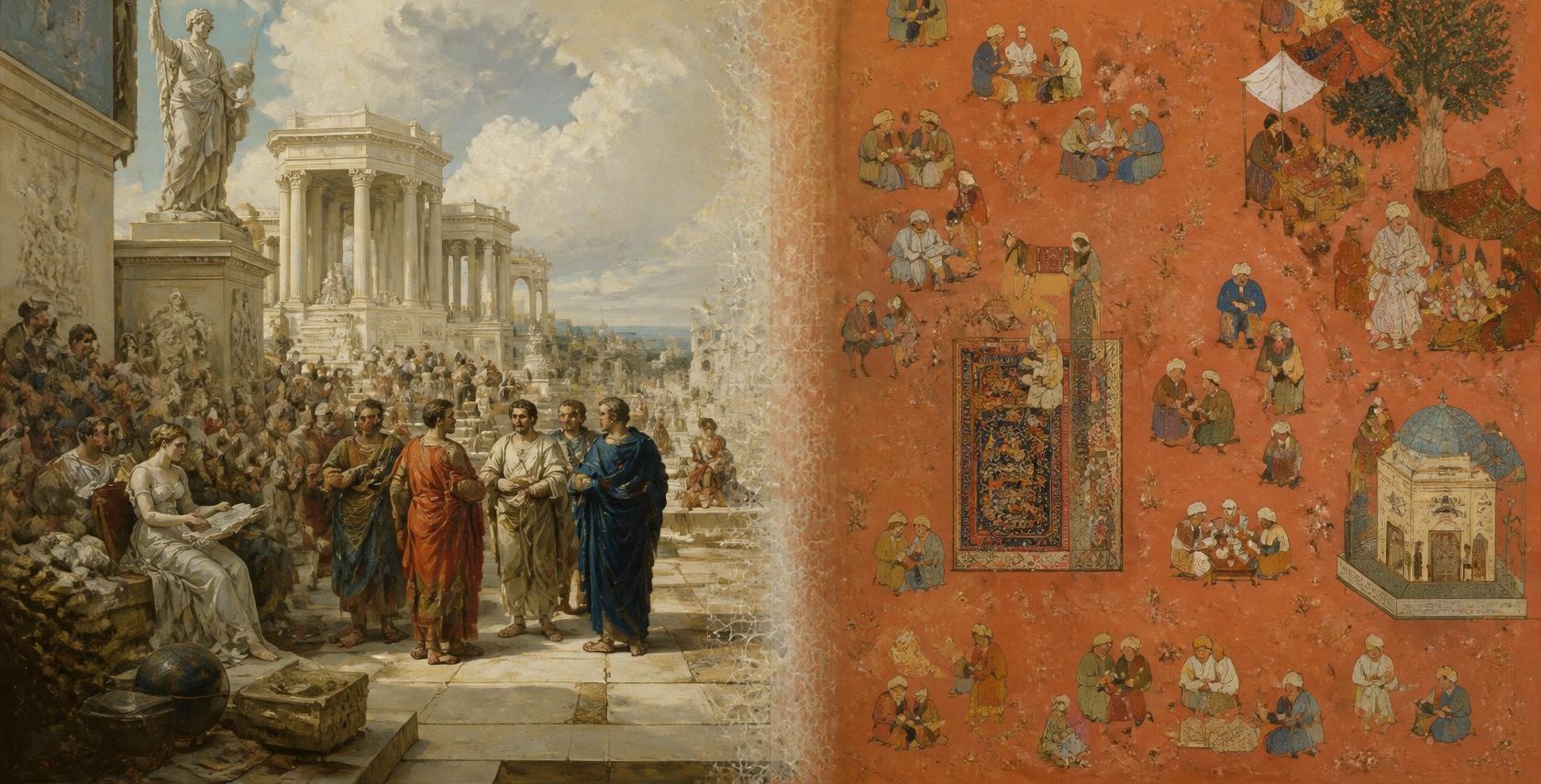
The spatial construction of miniature art offers a radical alternative to the linear-perspective tradition that is the cornerstone of Western painting and that confines the viewer to a single point of view. The two-dimensional, surface-based view of space preferred in this art is not a rejection of depth out of technical inability, but rather a conscious philosophical choice grounded in the understanding of being in Eastern and Islamic thought. Setting aside the deceptive depth of the physical world and the play of light and shadow, the artist reconstructs events and figures on a timeless and placeless plane. The divine gaze underlying this approach removes the viewer from the position of a limited observer on earth and turns them into a witness who watches everything from a sublime, all-encompassing point. On this seemingly depthless surface, objects gain a symbolic meaning, independent of physical distance, stacked according to a hierarchy of importance and without concealing one another.
Thus the void becomes not merely an area where figures are absent, but a meaningful silence that symbolises the omnipresence of the divine and gives spirit to the composition. This spatial construction represents a philosophical framework in which the artist sacrifices matter for meaning, seeks the truth beyond the visible, and redefines worldly reality in a transcendent aesthetic language. As a result, this original conception of space in the miniature offers the viewer a deeply considered narrative ground that conveys not the outer appearance of objects but their essence and their place within the universal order.
Click to read the article
DOI / Source: https://izlik.org/JA35RX23CW
Related Posts
Orientalism, Postcolonialism and Art
12 Aug 2026
