The article titled *"Interior Space in Contemporary Turkish Painting"* by Dr. Lecturer Hafize Pektaş and Ayşe Gül Gündüz is an academic study that examines the historical development of spatial perception in Turkish painting, with particular emphasis on the transformation that occurred after 1950. The study is of great significance because it focuses on the concept of interior space (interior/enterior), one of the most important elements in painting that supports the figure, reinforces meaning, and ensures the unity of composition.
The article's most significant contribution to the literature is that it brings together analyses of works by ten artists who incorporated interior spaces into Turkish painting after 1950, presenting these findings in a single source and enriching the field of art history. At the same time, the study serves as a guide for aspiring artists who experience difficulties when placing figures within an interior setting, offering exemplary solutions and technical analyses through the examined artworks. Furthermore, the article demonstrates how artists' perceptions of space parallel the sociological, economic, and technological changes of their respective periods, thereby integrating art history with social history.
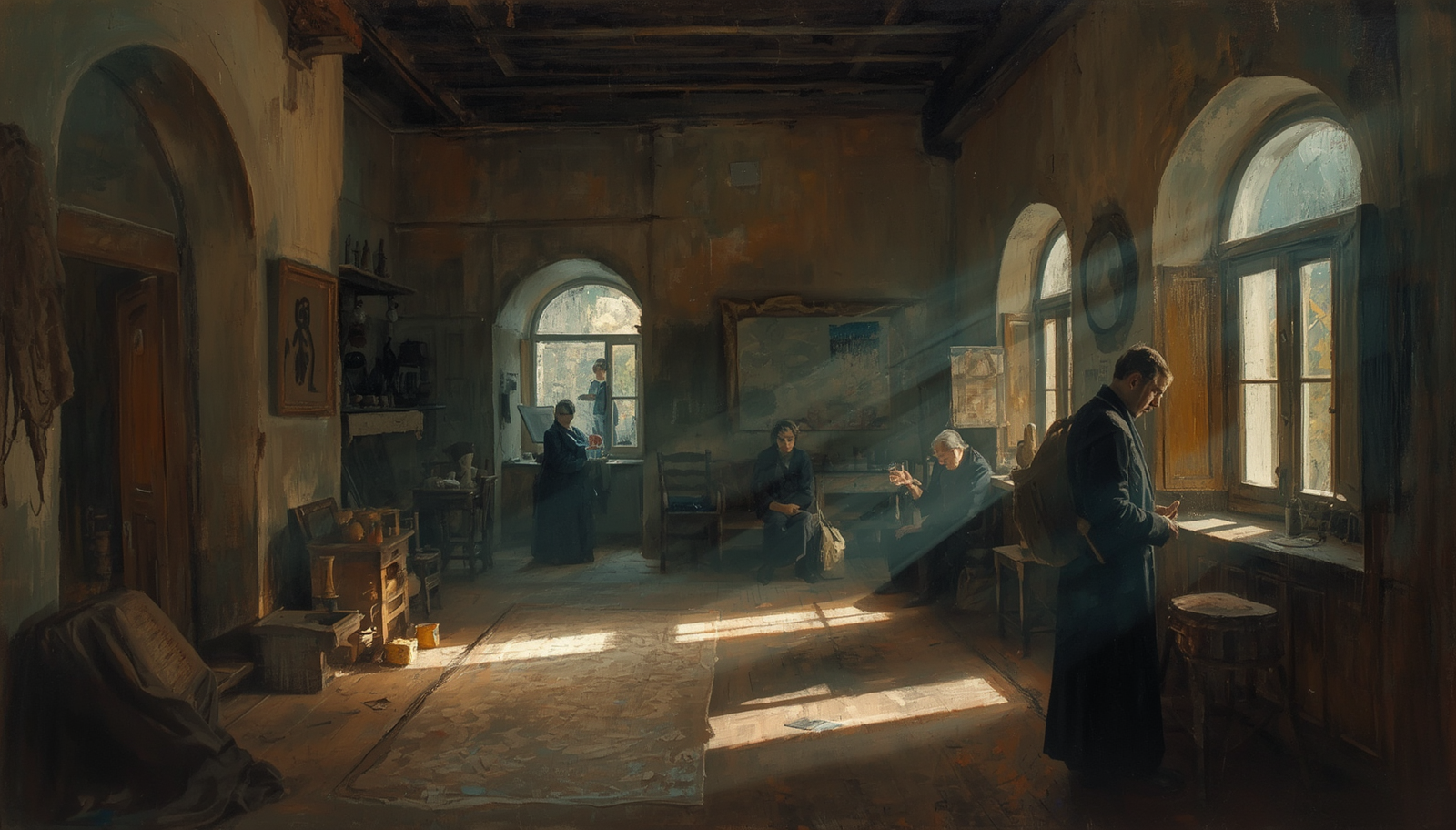
In terms of content, the article begins with a definition of the concept of interior space and summarizes its historical development before examining approaches from 1950 to the present day. The analyzed works feature a variety of interior settings, including modern domestic spaces, reflections of rural life, restaurants, entertainment venues, and artists' studios. It was found that most of the artworks employ a classical understanding of perspective, while the painters predominantly adopt expressive and representational theories in both formal and conceptual terms. The study analyzes the works of artists such as Eşref Üren, Şeref Bigalı, Fikret Mualla, Adnan Turani, İbrahim Balaban, Bedri Baykam, Gülsün Karamustafa, İrfan Önürmen, Nejat Melih Devrim, and Neşet Günal in terms of color, composition, and the narrative of space. In conclusion, the article emphasizes that space is not merely a physical environment but also a medium through which artists express their inner worlds, the social structure, and the cultural codes of their time.
Click here to read the article.